
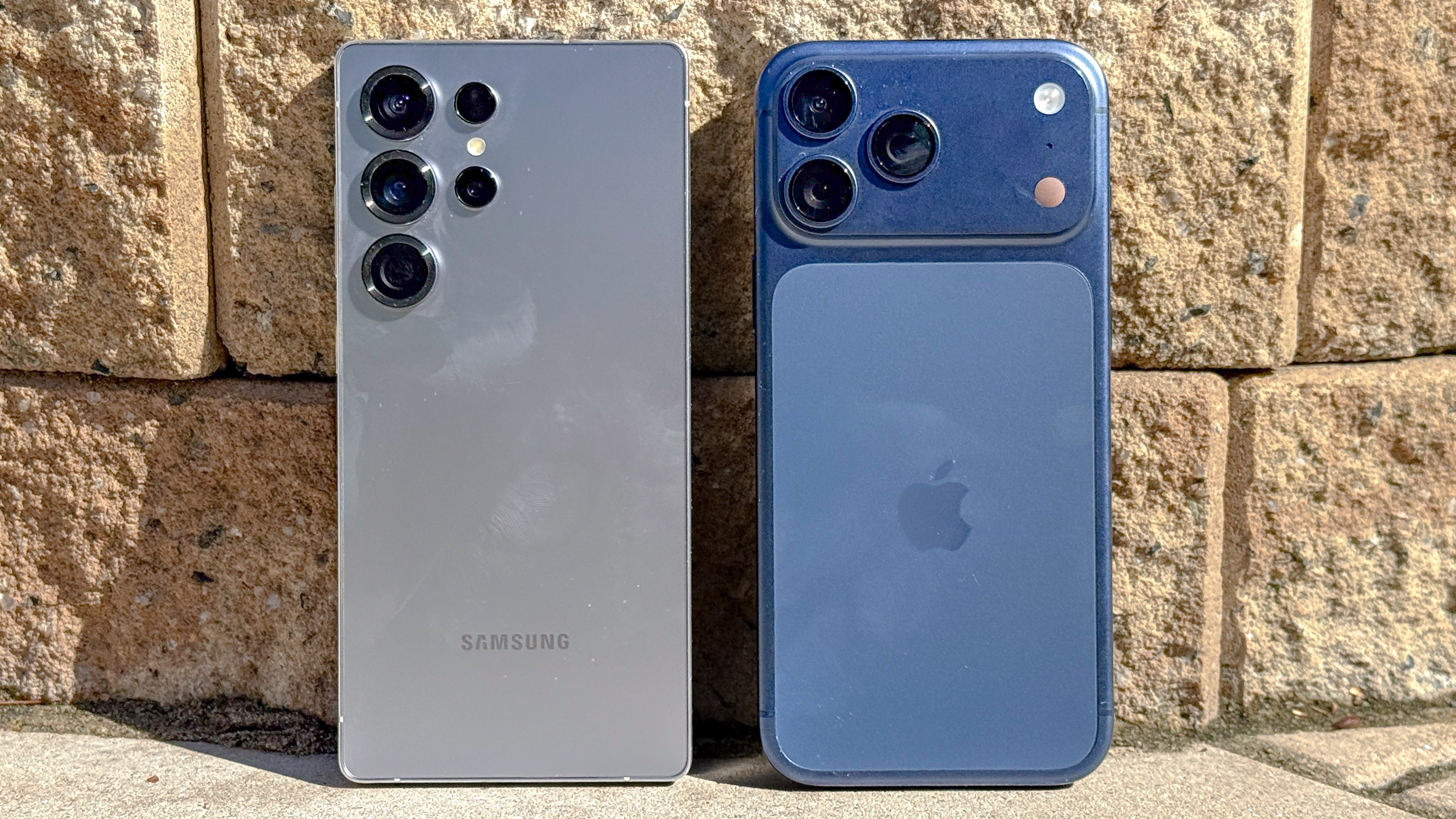
The Flagship Battle Everyone's Talking About
The Apple iPhone 17 Pro Max and Samsung Galaxy S26 Ultra are both out now, and honestly, choosing between them feels harder than deciding what to watch on Netflix when you've got an evening free.
I've spent the past month switching between both phones as my daily driver, sometimes changing twice a day just to torture myself. My mates think I'm mental, but it's given me proper insights into which one might suit you depending on what you actually value in a phone.
Before we dive in, let's be clear – both these phones cost an absolute fortune and will make your bank account cry. We're talking £1,200+ territory where you're getting premium everything regardless of which badge is on the back.
The question isn't really which one is objectively "better" because that's a pointless argument that achieves nothing. It's more about which one suits your needs, your habits, and the ecosystem you're already stuck in.
Design and Build Quality
The Apple iPhone 17 Pro Max sticks with the titanium frame design Apple introduced a while back, feeling proper premium and solid when you pick it up. It's got flat edges like a fancy cheese grater, a matte glass back that doesn't show fingerprints too badly, and weighs about 221 grams which is hefty but not ridiculously so.
The design is instantly recognisable as an iPhone from across a room, which some people absolutely love for its iconic status. Others find it boring as hell and wish Apple would do something different for once instead of rehashing the same basic shape.
The Galaxy S26 Ultra has gone with an aluminium frame and a slightly curved back that actually fits your palm better than the flat iPhone. Samsung's managed to keep the weight to 232 grams despite cramming in a larger screen and bigger battery, which is quite impressive engineering when you think about it.
They've used this Gorilla Armor glass that's supposedly more scratch-resistant, though I've still managed to put a tiny scratch on mine already. The S26 Ultra feels more modern and adventurous in design, though whether that's actually better or just different depends entirely on personal taste.
Display Comparison
The screen on the Apple iPhone 17 Pro Max is a 6.9-inch OLED panel running at 2868 x 1320 resolution with ProMotion up to 120Hz. Apple's colour accuracy remains exceptional if you care about that for photo editing, and the peak brightness of 2,500 nits means you can actually see the screen in harsh sunlight.
The bezels are thin and uniform all around, giving you loads of screen space without making the phone look weird. It's a gorgeous display that makes everything from reading texts to watching movies look brilliant.
Samsung's Galaxy S26 Ultra sports a slightly larger 6.8-inch Dynamic AMOLED display running at 3120 x 1440 resolution, which is technically sharper. The adaptive refresh rate goes from 1Hz all the way to 120Hz depending on what you're doing, and peak brightness hits 2,600 nits which edges out the iPhone slightly.
Samsung's screens have always been absolutely stunning with more vibrant colours straight out of the box. They're less accurate than Apple's if you're doing professional colour work, but for normal people watching YouTube and scrolling Instagram, they look more impressive.
Performance and Processing Power
The A18 Pro chip inside the Apple iPhone 17 Pro Max is an absolute monster in benchmarks, crushing everything else on the market. Real-world performance is basically instantaneous for everything – apps open before you've finished tapping them, multitasking is flawless, and even mental games run maxed out without the phone breaking a sweat.
Apple's tight integration between hardware and software means iOS runs buttery smooth on this hardware. You never see stutters or lag or any of that nonsense that plagued Android phones years ago.
Samsung's Galaxy S26 Ultra uses the Snapdragon 8 Gen 4 processor in most markets, which is also seriously powerful. Benchmark scores trail Apple's chip by maybe 15%, but in daily use, you'd genuinely struggle to notice any difference unless you're timing app launches with a stopwatch.
The S26 Ultra comes with either 12GB or 16GB of RAM compared to Apple's 8GB, which sounds like a massive difference. iOS manages memory way more efficiently though, so the RAM numbers don't tell the whole story about real-world performance.
Camera Systems Head-to-Head
The camera system on the Apple iPhone 17 Pro Max features a 52MP main sensor, 48MP ultra-wide, and dual telephoto lenses offering 6x optical zoom. Apple's computational photography produces consistently brilliant photos with accurate colours, excellent dynamic range, and reliable results whether you're shooting in bright sun or a dimly lit pub.
The night mode is particularly impressive, pulling detail out of scenes where you'd swear photos would be impossible. I've taken photos in basically complete darkness that look like they were shot in daylight, which feels like actual magic.
Samsung's S26 Ultra rocks a 200MP main sensor, 50MP ultra-wide, and dual telephoto lenses offering 5x and 10x optical zoom respectively. That 200MP sensor allows for absolutely mental digital zoom capabilities where you can zoom into details you'd never see with your actual eyes.
Samsung's processing produces more vibrant, punchy photos that look fantastic immediately when you post them to Instagram. Night photography on the S26 Ultra is also excellent, though it tends to brighten scenes more aggressively which can look a bit artificial.
Photography Philosophy Differences
The Apple iPhone 17 Pro Max produces photos that prioritise accuracy and natural-looking results straight out of the camera without heavy-handed processing. Colours are true to life, skin tones look like actual human skin, and what you see through the viewfinder is generally what you get in the final image.
Professional photographers tend to prefer iPhone photos as a starting point because they're easier to edit. You're not fighting against aggressive processing trying to undo what the phone already did to your image.
Samsung's approach with the S26 Ultra is creating photos that immediately look impressive without any editing required. Colours are more saturated, contrast is boosted, and the overall look is way more Instagram-ready straight from the camera.
Casual users often prefer Samsung's photos because they just pop more on social media feeds. Photo purists sometimes find them over-processed and less natural, but most normal people couldn't care less about that.
Video Recording Capabilities
Video recording on the Apple iPhone 17 Pro Max remains the absolute gold standard in the smartphone world, full stop. The stabilisation is exceptional, colour science is industry-leading, and the quality genuinely rivals proper video cameras costing thousands more.
You can shoot 4K ProRes at 60fps if you want, though that'll fill your storage faster than you can say "why is my phone full." The cinematic mode works brilliantly for creating that shallow depth-of-field effect, and the transitions between subjects look natural rather than jarring and weird.
The Galaxy S26 Ultra's video capabilities have improved massively and are now genuinely excellent. You can shoot 8K at 30fps or 4K at 120fps for proper slow-motion footage that looks fantastic.
Video stabilisation is excellent though not quite as good as Apple's, and colours can sometimes shift noticeably when you switch between lenses. For casual video recording, the S26 Ultra is brilliant, but serious video creators still tend to favour the iPhone for more reliable professional results.
Operating Systems and Software
The Apple iPhone 17 Pro Max runs iOS 19, which is polished, intuitive, and deeply integrated with Apple's whole ecosystem. The software experience is consistent across all Apple devices, updates arrive promptly for everyone at the same time, and the App Store generally gets new apps before Android does.
iOS is more restrictive than Android though, giving you way less freedom to customise or change how things work. Some people love this because things just work without messing about, others find it frustrating and limiting.
Samsung's Galaxy S26 Ultra runs One UI 7 on top of Android 15, offering absolutely massive customisation options. You can change basically everything about how the phone looks and works, from icon packs to system-wide themes to how gestures behave.
One UI has matured into an excellent interface that's way less cluttered than Samsung's software used to be. Samsung still bundles loads of duplicate apps alongside Google's versions though, which is a bit annoying.
Ecosystem Integration
The Apple iPhone 17 Pro Max absolutely shines if you're already invested in Apple's ecosystem with other devices. Handoff lets you start writing an email on your phone and seamlessly finish it on your MacBook, AirDrop makes sharing files between devices completely effortless, and everything just works together without you thinking about it.
The ecosystem lock-in is very real though – once you're deep in Apple's world, leaving becomes increasingly difficult. So many conveniences disappear if you switch to Android that it feels like moving from a nice flat into a dodgy bedsit.
Samsung's ecosystem with Galaxy devices, Galaxy Buds, and Galaxy Watches is decent but doesn't match Apple's seamless integration. However, the S26 Ultra plays way nicer with other brands' devices because Android is inherently more open.
If you use a Windows laptop, mix and match different brands, or value flexibility over seamless integration, Samsung's approach suits you better. You're not locked into one manufacturer's vision of how everything should work together.
Battery Life Comparison
Battery life on the Apple iPhone 17 Pro Max is genuinely excellent, consistently getting through full days with 30-40% remaining even with proper heavy use. I'm talking loads of photography, constant video streaming on the commute, gaming, and using navigation around London – the battery just keeps going.
You can realistically stretch to two days with moderate use, which is liberating compared to older iPhones. I remember when getting through one day was touch and go, so this feels like a massive improvement.
The Galaxy S26 Ultra's 5,000mAh battery is physically larger than whatever Apple's crammed into the iPhone. Battery life is similarly impressive, with Samsung edging slightly ahead during video playback and general use, though the difference isn't massive in real-world terms.
Where Samsung properly pulls ahead is charging speed – 45W wired charging gets you to full way faster than Apple's 27W. Samsung also includes faster wireless charging, which matters if you're in a rush and need a quick top-up.
Storage Options and Pricing
The Apple iPhone 17 Pro Max starts at £1,299 for 256GB, with 512GB at £1,449 and 1TB topping out at £1,649. Apple's storage pricing remains absolutely ridiculous considering what storage actually costs manufacturers, but you're stuck with it.
There's no expandable storage on iPhones, so choose carefully at purchase because you can't upgrade later. Running out of space means either deleting stuff constantly or paying for iCloud storage subscriptions, which add ongoing costs.
Samsung's S26 Ultra starts at £1,199 for 256GB, undercutting the iPhone by a hundred quid. The 512GB model is £1,299 and 1TB is £1,499, making Samsung cheaper across the board.
More importantly, the S26 Ultra supports microSD cards up to 1TB, meaning you can add cheap storage whenever you need it. This flexibility saves you from paying Apple's premium prices for storage you might not even need immediately.
Customisation and Flexibility
The Apple iPhone 17 Pro Max offers pretty limited customisation compared to Android, which frustrates some people but others love. You can arrange apps however you want, use widgets, and customise the lock screen a bit, but fundamentally iOS looks and behaves like iOS.
Apple's "walled garden" approach means a consistent experience and better security because they control everything. You're playing by Apple's rules though, whether you like them or not, with no way to change fundamental behaviours.
Samsung's S26 Ultra lets you customise absolutely everything if you fancy spending hours tinkering. Different launchers, icon packs, system fonts, navigation gestures, behaviour tweaks – it's basically endless.
You can make the S26 Ultra look and work exactly how you want, or just use Samsung's defaults if customisation doesn't interest you. The flexibility is massive, though it can also feel overwhelming if you just want things to work.
S Pen Functionality
The Apple iPhone 17 Pro Max doesn't come with a stylus and never will because Apple wants you to buy an iPad for that. If you desperately want stylus input on an iPhone, you're looking at dodgy third-party options that work okay but aren't properly integrated.
For most people this doesn't matter at all because they never use styluses anyway. But if stylus input is important to you, it's a significant limitation that immediately rules out the iPhone.
Samsung's S26 Ultra includes the S Pen stylus that slots into the phone's body, giving you proper precise input. The S Pen is genuinely useful if you take handwritten notes, sketch ideas, mark up documents, or do detailed photo editing on your phone.
It's one of the S26 Ultra's unique features that the iPhone simply cannot match. For certain professional use cases, having an integrated stylus is a massive advantage that justifies choosing Samsung.
Face ID vs Ultrasonic Fingerprint
The Apple iPhone 17 Pro Max uses Face ID for biometric authentication, which works brilliantly in most situations. It's fast, secure, and works from surprisingly wide angles, though it still struggles with face masks and doesn't work at all in complete darkness.
Face ID is convenient when it works but frustrating when it doesn't, like when your phone's flat on a desk. You need to pick it up or awkwardly angle it toward your face, which feels ridiculous.
The Galaxy S26 Ultra uses an ultrasonic fingerprint sensor embedded under the display, which is ridiculously fast and reliable. It works regardless of lighting conditions, doesn't care if you're wearing a mask or glasses, and lets you unlock your phone when it's lying flat.
The fingerprint sensor is more consistently convenient in daily use across different situations. Face unlock is also available as a secondary option if you want it, giving you flexibility.
Gaming Performance
Gaming on the Apple iPhone 17 Pro Max is exceptional with sustained high frame rates and brilliant graphics quality. The A18 Pro chip handles even the most demanding titles effortlessly, and Apple's Metal API means games are generally well-optimised for iOS.
The phone doesn't thermal throttle as quickly as previous models thanks to improved cooling inside. You can play intensive games for ages without performance dropping off, which matters for serious mobile gamers.
The S26 Ultra's gaming performance is similarly excellent with the Snapdragon 8 Gen 4 processor handling everything you throw at it. Samsung's Game Booster software provides genuinely useful features like blocking notifications during games, monitoring frame rates, and recording gameplay without third-party apps.
The slightly larger screen gives you a tiny bit more space for gaming, which helps with visibility. The 16GB RAM option ensures absolutely butter-smooth multitasking between games and other apps without anything slowing down.
Software Updates and Longevity
The Apple iPhone 17 Pro Max will receive iOS updates for approximately seven years based on Apple's track record with previous models. That means software support through at least 2032, which is properly impressive longevity.
Security updates arrive promptly and simultaneously for all supported devices worldwide. You're never stuck waiting months for critical security fixes while other regions get them first.
Samsung now promises seven years of Android updates and security patches for the S26 Ultra, matching Apple's commitment. This is a massive improvement over Samsung's previous support windows that were frankly rubbish.
Both phones offer excellent long-term software support now, removing this as a major differentiating factor. You can confidently keep either phone for many years without worrying about it becoming outdated.
Audio Quality
The stereo speakers on the Apple iPhone 17 Pro Max sound excellent with clear vocals, decent bass response, and impressive volume. Spatial audio works brilliantly with supported content, creating a properly immersive listening experience when you're watching films.
The lack of a headphone jack remains annoying for some people who prefer wired headphones. You're forced into wireless headphones or using adapters, which is just another thing to carry and potentially lose.
The Galaxy S26 Ultra's speakers are tuned by AKG and sound marginally better with richer bass. Samsung also ditched the headphone jack years ago like everyone else, but they include higher-quality Bluetooth codecs that audiophiles get excited about.
In practice, both phones sound great for watching videos or listening to music without headphones. The differences are minor enough that it shouldn't influence your buying decision unless you're really into audio quality.
Build Quality and Durability
The Apple iPhone 17 Pro Max feels exceptionally well-built with tight tolerances and zero creaks or flex. Ceramic Shield glass on the front is drop and scratch resistant, though it's still glass and will absolutely shatter if you drop it onto concrete from height.
The titanium frame is more durable than stainless steel and resists scratches better over time. It still shows dings and dents if you're rough with it though, so a case is probably sensible.
Samsung's S26 Ultra uses Gorilla Armor glass which supposedly resists scratches better than previous generations. The aluminium frame feels solid throughout, and build quality is excellent with no quality control issues.
Both phones are IP68 water and dust resistant, meaning they'll survive accidental dunks in water or getting caught in rain. Neither is indestructible though, so treat them with reasonable care.
Repair Costs and Availability
The Apple iPhone 17 Pro Max is properly expensive to repair through official Apple channels, with screen replacements costing over £300. Other repairs like back glass or camera replacements are similarly eye-watering, which is frustrating given how much the phone already cost.
However, Apple's service network is extensive with Apple Stores in most cities and loads of authorised repair centres. E-TECH61, a UK-based online store, stocks different types of parts for all iPhone series, offering more affordable third-party repair options.
Samsung repairs through official channels are also expensive, though slightly cheaper than Apple's rates on average. Third-party repair options exist but are less common than for iPhones, which can be limiting.
Parts availability through services like E-TECH61 gives iPhone owners more repair options over the phone's lifespan. This matters when accidents inevitably happen and you need affordable fixes.
Unique Features Worth Mentioning
The Apple iPhone 17 Pro Max includes features like the Action Button for quick shortcuts, which is genuinely useful once you set it up. Crash Detection and Fall Detection can automatically call emergency services if something bad happens, and satellite connectivity works in emergencies when there's no cell service.
These features might seem gimmicky in marketing materials but can genuinely be lifesaving in the right situations. The deep integration with Apple's ecosystem remains a unique strength if you're already using MacBooks, iPads, or Apple Watches.
The S26 Ultra's unique features include the S Pen stylus, DeX mode that turns your phone into a desktop computer when connected to a monitor, and more flexible file management. Samsung's multitasking with floating windows and split-screen apps is also more capable than iOS offers.
These features appeal to power users who want their phone to do more beyond basic smartphone tasks. For casual users they might not matter much, but for certain workflows they're genuinely compelling.
Privacy and Security
The Apple iPhone 17 Pro Max benefits from Apple's strong stance on privacy, with features like App Tracking Transparency forcing apps to ask permission. On-device processing for sensitive data means information doesn't leave your phone unnecessarily.
Apple's business model doesn't rely on harvesting your data for advertising like Google's does. This gives them less incentive to hoover up your information, which is reassuring if you care about privacy.
Samsung and Android's privacy has improved substantially with Android 15 including similar privacy controls to iOS. However, Google's business model fundamentally involves data collection for targeted advertising throughout their services.
The S26 Ultra is still secure and private enough for most people's needs. Apple edges ahead though for those particularly concerned about privacy and data collection practices.
Which One for Photography Enthusiasts?
If photography is genuinely important to you, the Apple iPhone 17 Pro Max produces more natural, accurate photos that professional photographers prefer. The colour science is exceptional, dynamic range handling is brilliant, and results are reliably consistent across different lighting conditions.
Video recording remains the best in any smartphone by a significant margin. If you shoot lots of video, the iPhone is the obvious choice without question.
However, the S26 Ultra's 200MP sensor and superior zoom capabilities give it advantages in specific situations. That 10x optical zoom is genuinely impressive for distant subjects, and the extra resolution allows for serious cropping in post-production.
Casual users often prefer Samsung's punchier photos straight out of the camera because they look better on Instagram. If you're not editing photos and just want things to look good immediately, Samsung's approach works brilliantly.
For Productivity and Work
The Apple iPhone 17 Pro Max excels if your work revolves around other Apple devices and services in your office. The seamless integration with MacBooks and iPads makes it brilliant for people in creative industries or offices standardised on Apple gear.
Email, calendar, and productivity apps work smoothly, though iOS limitations around file management can frustrate people. If you're used to desktop-style workflows, iOS can feel restrictive and limiting.
Samsung's S26 Ultra with DeX mode and the S Pen makes it genuinely useful for serious work in ways iPhones can't match. You can edit documents with precision using the stylus, plug into a monitor for a desktop-like experience, and manage files more flexibly like an actual computer.
For people who want their phone to potentially replace a laptop for basic work tasks, the S26 Ultra makes a stronger case. It's more computer-like in its capabilities and flexibility.
Ecosystem Lock-In Considerations
The Apple iPhone 17 Pro Max deepens your investment in Apple's ecosystem, which is brilliant if you're already there but creates serious lock-in. Your iMessages don't work on Android, your Apple Watch becomes useless, and all those apps you've purchased need repurchasing.
This lock-in is somewhat intentional on Apple's part, keeping customers within their ecosystem even when competitors offer compelling alternatives. It works too – most people stay with iPhones because switching feels too difficult.
Samsung and Android offer more freedom to switch between brands and manufacturers without losing much. If you decide you prefer Google's Pixel phone next year, you can switch without your whole digital life falling apart.
Your apps transfer over, your messages work the same, and your smartwatch probably still functions. This flexibility matters if you value keeping your options open rather than committing fully to one company.
Value Proposition
The Apple iPhone 17 Pro Max costs more upfront but holds its value significantly better over time if you sell or trade it in. iPhones command much higher resale prices than Samsung phones, potentially offsetting some of the initial price premium.
The longer software support also means you can use it for more years before it becomes outdated. Running the cost-per-year calculation, the iPhone looks less expensive than the initial sticker shock suggests.
Samsung's S26 Ultra offers better value upfront with similar performance for less money and expandable storage. However, Samsung phones depreciate way faster, meaning resale value drops steeply within the first year.
Running total cost of ownership over three to four years, the difference narrows considerably. It depends on your specific usage and whether you typically sell your old phone.
The Switching Decision
If you're currently an iPhone user considering the Apple iPhone 17 Pro Max, staying within Apple's ecosystem makes sense unless you're actively frustrated. The learning curve switching to Android is real, you'll lose ecosystem benefits, and the adjustment takes time.
The S26 Ultra is excellent, but switching ecosystems should be motivated by genuine dissatisfaction. Don't switch just because you fancy something different without considering what you're giving up.
For current Samsung or Android users, switching to the iPhone means embracing Apple's ecosystem and accepting iOS limitations. You gain exceptional cameras, longer software support, and better ecosystem integration if you use other Apple products.
You lose customisation flexibility, the S Pen, and easy file management that works like a computer. The decision should be based on whether Apple's strengths align with your actual needs.
Which One Should You Actually Buy?
Honestly, the Apple iPhone 17 Pro Max makes most sense if you're already deep in Apple's ecosystem with other devices and services. The seamless integration, exceptional cameras, and iOS polish create an experience that's genuinely hard to match if you value simplicity.
If you prioritise video recording, want the longest possible software support, or just prefer iOS, the iPhone is the obvious choice. The higher price is somewhat justified by better resale value and longer usable lifespan.
The Samsung Galaxy S26 Ultra makes more sense if you value flexibility, customisation, and power-user features like the S Pen. It's marginally cheaper upfront, offers expandable storage, and gives you way more control over how everything works.
For Android users or people who want their phone to be more computer-like, the S26 Ultra delivers excellent value. The unique features like DeX mode genuinely expand what's possible with a smartphone.
Final Verdict
So which flagship wins the Apple iPhone 17 Pro Max versus Samsung Galaxy S26 Ultra battle then? The frustrating truth is there's no universal answer because both phones are exceptional in completely different ways.
The iPhone is probably the safer choice with broader appeal, stronger ecosystem integration, and more consistent results. It's the phone for people who value things just working reliably without fuss or endless customisation.
The Galaxy S26 Ultra is the phone for people who want more control, appreciate unique features, and value getting more features for slightly less money. Both will serve you brilliantly for years and do basically anything you'd want from a smartphone.
Your choice should be based on ecosystem investment, which operating system you actually prefer, and which specific features matter to your daily life. And remember, if you choose the iPhone route, E-TECH61 stocks different types of parts for all iPhone series, making repairs more affordable over the phone's lifespan when accidents inevitably happen to all of us.
Share:
Is the Apple iPhone 17 Pro Max Worth the Upgrade?
How to Pause Location Tracking on iPhone for Privacy?