
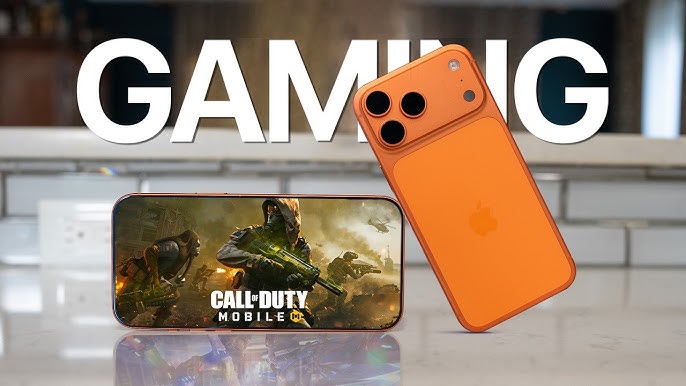
Every single year we go through this same cycle where people convince themselves the next iPhone will somehow transform into this incredible gaming powerhouse. I've been watching tech YouTubers and concept artists hype up iPhone 17 gaming like Apple's about to compete with Nintendo Switch or something, and honestly it's getting ridiculous.
Don't get me wrong - iPhones are fast and games run great on them. But there's this massive gap between "runs games smoothly" and being the ultimate gaming phone when companies like ASUS and Lenovo are literally building phones with cooling fans and dedicated gaming buttons that Apple would never touch.
The A19 Chip: Expected Performance Improvements
Yeah, the iPhone 17's gonna have a crazy fast chip - probably the A18 Pro or A19 depending what Apple decides to call it. We're talking maybe 15-20% faster than last year's model, which sounds impressive until you realize your current iPhone already plays every mobile game perfectly fine.
Here's what nobody wants to admit - benchmark scores don't actually matter once you pass a certain performance threshold. Whether your phone scores 12,000 or 15,000 on Geekbench makes zero difference when you're playing Call of Duty Mobile or Genshin Impact because both chips handle those games easily.
Ray Tracing and Graphics Technology Reality
People keep talking about iPhone 17 bringing console-quality ray tracing to mobile gaming like it's some confirmed feature. Listen, mobile ray tracing exists but it's nowhere close to what your PlayStation 5 does, and it absolutely murders battery life.
Even if Apple includes ray tracing hardware, most game developers won't use it heavily because players hate when their phone gets hot and dies after 45 minutes. Real console-quality graphics require way more power than any phone battery can sustain without literally catching fire.
Display Technology: ProMotion and Beyond
The 120Hz ProMotion screen on iPhone Pro models is legitimately smooth and makes gaming feel more responsive. If Apple finally puts ProMotion on the regular iPhone 17 instead of keeping it Pro-exclusive, that would actually be a noticeable improvement for gaming.
Some rumors suggest 144Hz displays but honestly who cares? The difference between 120Hz and 144Hz is so minimal that you'd never notice it in actual gameplay. Apple's better off improving brightness and battery efficiency instead of chasing refresh rate numbers that look good on spec sheets but don't matter in reality.
Thermal Management: The Gaming Phone Achilles Heel
Here's where things get real - iPhones throttle performance when they heat up, and gaming heats them up fast. You can have the most powerful chip in the world, but if it's slowing itself down after 15 minutes to prevent overheating, what's the point?
Gaming phones have actual cooling systems with vapor chambers, copper heat pipes, and some even have little fans inside. Apple makes thin, pretty phones that fit in your pocket nicely but get uncomfortably warm during intense gaming sessions and then slow down to protect themselves.
Battery Life During Gaming Sessions
Let me be brutally honest about iPhone battery life during gaming - it sucks. Not because iPhones have bad batteries, but because high-end mobile gaming destroys any phone's battery, and iPhones have smaller batteries than gaming phones to keep them thin.
You're looking at maybe 3-4 hours of serious gaming before your iPhone 17 is begging for a charger. Gaming phones with 5000mAh or 6000mAh batteries last way longer because they prioritize gaming endurance over being 7.8mm thin instead of 8.5mm thin.
The Lack of Gaming-Specific Features
You know what's not coming to iPhone 17? Shoulder trigger buttons for better FPS controls. Programmable gaming modes that block notifications during matches. Bypass charging that powers the phone directly while gaming so your battery doesn't degrade. All the stuff actual gaming phones include.
Apple designs premium smartphones for everyone, not specialized gaming devices for a niche audience. That's fine, but it means iPhone 17 won't include gaming-focused hardware features no matter how powerful the processor gets.
iOS Gaming Ecosystem Strengths
I'll give Apple credit where it's due - the iOS gaming ecosystem is actually really solid compared to Android's mess. Games on the App Store generally work properly, there's way less sketchy malware disguised as games, and Apple Arcade offers quality games without predatory monetization.
Developers also tend to optimize their iOS versions better because they only need to target a handful of iPhone models instead of thousands of different Android devices. Games often launch on iOS first and run smoother thanks to that focused optimization effort.
The Apple Arcade Advantage and Limitations
Apple Arcade is honestly pretty good if you like the types of games they offer. For five bucks a month you get access to hundreds of games with no ads and no in-app purchase nonsense trying to nickel and dime you constantly.
Problem is, Apple Arcade doesn't have the games most people actually play. You're not getting PUBG Mobile, Call of Duty, or Genshin Impact through the subscription. If your gaming diet consists of big multiplayer titles, Apple Arcade basically doesn't matter to you.
Controller Support and Accessory Ecosystem
iPhones work great with Xbox and PlayStation controllers right out of the box, which is actually awesome. You don't need special iPhone controllers or weird adapters - just pair your existing console controller and you're good to go.
But here's the catch - most popular mobile games are designed for touchscreen controls and barely support controllers properly. Playing PUBG Mobile with a controller feels clunky because the game's built around touch, and controller players don't even get matched with other controller players fairly.
Cloud Gaming Performance on iPhone 17
Xbox Cloud Gaming and GeForce NOW work on iPhones, potentially letting you play actual console and PC games on your phone. If this technology gets good enough with low enough latency, it could genuinely change mobile gaming completely.
Except cloud gaming still needs rock-solid internet with consistent low latency, which isn't realistic for most people most of the time. Even on 5G, you'll hit lag spikes that make competitive gaming frustrating, and forget about playing anywhere without excellent connectivity.
Game Library Gaps Compared to Dedicated Gaming Phones
Fortnite's been gone from iOS for years now because of Apple's fight with Epic Games. That's one of the biggest games in the world and iPhone users just can't play it because of business disputes that have nothing to do with hardware.
Android also lets you install game emulators and apps from outside the official store way easier than iOS does. If playing classic games through emulation matters to you, iPhones make that unnecessarily difficult compared to Android gaming phones.
Comparing iPhone 17 to Actual Gaming Phones
ASUS ROG Phone has a literal cooling fan inside, RGB lighting, ultrasonic shoulder buttons, and a 6000mAh battery. RedMagic phones have similar gaming features plus magnetic charging ports so cables don't get in the way during landscape gaming.
iPhone 17 will be thinner, prettier, take better photos, and integrate with your other Apple stuff seamlessly. It's gonna be a great phone that plays games well, but it's fundamentally not designed as a gaming device the way those other phones are.
The Heat Problem Nobody Wants to Discuss
Play Genshin Impact on your iPhone for twenty minutes and tell me it doesn't get uncomfortably hot. That heat isn't just annoying - it's the phone throttling performance to prevent damage, which means worse frame rates and stuttering gameplay.
Apple's aluminum construction conducts heat really well, which sounds good until you realize that means the heat transfers directly to your hands. Thicker plastic gaming phones don't feel as premium but they handle heat better and stay more comfortable during long gaming sessions.
Screen Size and Ergonomics for Gaming
The regular iPhone 17 will probably have a 6.1-inch screen which is fine but not amazing for gaming. Gaming phones often rock 6.7-6.8 inch displays with better aspect ratios for landscape gaming than the iPhone's proportions.
Also, iPhones are kinda slippery and not super comfortable to hold for hour-long gaming sessions. Gaming phones are usually slightly thicker with textured backs and better weight distribution making them genuinely more comfortable for extended play.
Storage Configurations and Gaming Impact
If iPhone 17 starts at 128GB like recent models, you're gonna struggle with storage fast. Call of Duty Mobile is like 15GB, Genshin Impact is over 20GB, and you've still got all your photos, videos, and other apps competing for space.
No expandable storage means you're stuck with what you bought, and Apple charges absolutely ridiculous amounts to upgrade storage. Spending an extra $200 for more storage when you could buy a $30 SD card on Android is pretty frustrating for people who want lots of games installed.
Multiplayer Gaming and Network Performance
iPhone 17's 5G modem should be fast with low latency for multiplayer gaming, which genuinely helps in competitive games where milliseconds matter. That's assuming you're in an area with actual good 5G coverage, which honestly isn't everywhere yet despite what carriers claim.
Most of the time you're gaming on WiFi anyway, and network performance is about your home internet more than your phone. The 5G advantage mainly helps people who game on cellular data a lot, which also drains your battery way faster than WiFi gaming does.
Audio Quality for Gaming Immersion
iPhones actually have really good stereo speakers that sound way better than you'd expect from phone speakers. For casual gaming without headphones, the built-in audio is genuinely solid and creates decent immersion without needing external speakers.
Serious gamers use headphones anyway though, and that's where things get annoying. Bluetooth latency still causes audio sync issues in fast games, and wired headphones need adapters or USB-C which is less convenient than just plugging into a headphone jack that doesn't exist anymore.
Software Optimization and Developer Support
Apple's closed ecosystem actually helps gaming because developers can optimize for specific hardware configurations. When you only need to target five or six iPhone models instead of hundreds of Android devices, you can squeeze out better performance.
Metal graphics API is legitimately good and gives developers powerful tools for rendering impressive graphics efficiently. Games built properly with Metal take full advantage of iPhone hardware in ways that generic cross-platform engines sometimes don't.
Haptic Feedback and Gaming Feel
The Taptic Engine in iPhones is honestly one of the best haptic systems in any smartphone. Games that properly implement haptic feedback feel way more immersive with subtle vibrations that enhance the gameplay experience without feeling gimmicky.
Not every game uses haptics well though, and when they do, it drains your battery noticeably faster. It's a cool feature that genuinely improves gaming when implemented properly, but developers don't always bother putting in the effort.
Price vs. Performance Value Proposition
iPhone 17 Pro is gonna cost like $1,200 minimum, probably more for higher storage. For that money you could buy a really solid mid-range phone for regular use plus a dedicated gaming phone and still have money left over.
If gaming is your main phone priority, spending iPhone money on a device that's great at everything but not optimized specifically for gaming seems questionable. But if you want one phone that does everything well including gaming, the value proposition makes more sense.
The Fortnite Problem and Epic Games Drama
Fortnite's still not on iOS and probably won't be anytime soon given how that legal battle went. That's genuinely one of the world's most popular games that iPhone users just can't access, which seems pretty disqualifying for "ultimate gaming phone" status.
This whole situation perfectly illustrates how having the best hardware doesn't matter if you can't actually play the games you want. Business disputes and App Store policies affect gaming just as much as processor speed does.
Gaming Performance vs. Daily Use Balance
Most people buy iPhones because they want great cameras, smooth iOS experience, iMessage with their friends, and reliable daily performance. Gaming is like a bonus feature, not the main reason people spend over a thousand dollars on a phone.
iPhone 17 will be an amazing all-around phone that also happens to game really well. That's different from being a gaming phone that also handles normal smartphone stuff, which is what dedicated gaming devices are.
Realistic iPhone 17 Gaming Assessment
Look, iPhone 17 is gonna be incredibly fast with gorgeous graphics and smooth gameplay for anything you throw at it. Games will look amazing, run at high frame rates, and the overall experience will be premium and polished like Apple products usually are.
But calling it the ultimate gaming phone requires pretending dedicated gaming phones with better cooling, bigger batteries, gaming controls, and optimized software don't exist. iPhone 17 will be the best overall phone that also games great - just not the best phone specifically for gaming above all else.
Share:
iPhone 17 Battery Life for Gaming: How Long Does It Last?
Is the iPhone 17 Speaker Quality Good? An Honest Audio Analysis