
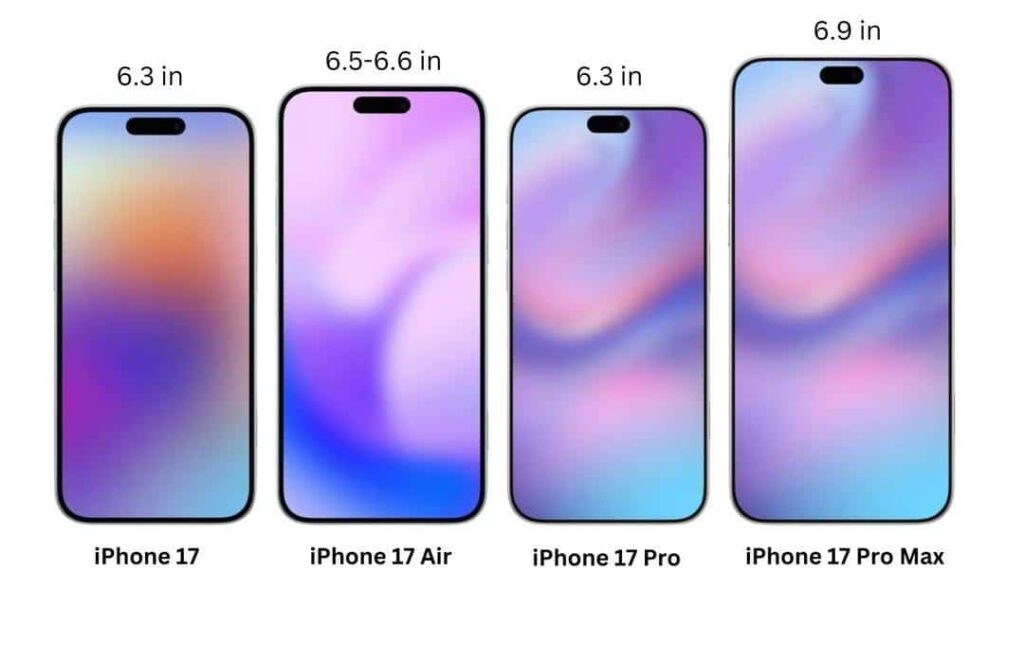
We present an exhaustive examination of the iPhone 17 screen sizes across all models in Apple's latest flagship lineup, providing detailed specifications, comparative measurements, and practical implications for users considering their next smartphone purchase. The iPhone 17 series introduces refined display dimensions that balance portability with visual real estate, offering distinct advantages depending on individual usage patterns and preferences.
iPhone 17 Screen Size Comparison
Our comprehensive comparison encompasses the standard iPhone 17, the feature-rich iPhone 17 Pro, and the expansive iPhone 17 Pro Max, analyzing how each model's screen size impacts daily usage, content consumption, productivity, and overall user experience.
The display technology employed across the iPhone 17 lineup represents Apple's continued commitment to visual excellence, incorporating advanced OLED panels with ProMotion adaptive refresh rate technology, improved color accuracy, enhanced brightness capabilities, and power-efficient backlighting systems.
We examine not only the raw diagonal measurements but also the practical screen real estate, aspect ratios, pixel densities, and how these specifications translate into real-world benefits for photography, videography, gaming, productivity applications, and multimedia consumption.
Understanding these distinctions enables informed decision-making when selecting the iPhone 17 model that best aligns with personal requirements and usage scenarios.
iPhone 17 Standard Model Screen Size and Display Characteristics
The standard iPhone 17 features a 6.1-inch display measured diagonally, maintaining the dimension that has become synonymous with Apple's baseline flagship model since the iPhone 12 generation.
This screen size strikes an optimal balance between usability and portability, fitting comfortably in most hands while providing sufficient visual workspace for multitasking, content creation, and media consumption.
The 6.1-inch diagonal translates to a display area of approximately 90.2 square centimeters, offering substantial screen real estate without compromising one-handed operation capabilities that many users prioritize.
We observe that the iPhone 17 display incorporates Super Retina XDR technology with a resolution of 2556 × 1179 pixels, delivering a pixel density of 460 pixels per inch. This exceptional pixel density ensures crisp text rendering, smooth graphics, and imperceptible individual pixels even when viewing the screen at close distances. The display maintains Apple's characteristic 19.5:9 aspect ratio, slightly taller than the traditional 16:9 format, providing additional vertical space particularly beneficial for social media browsing, document editing, and web content consumption where scrolling represents the primary navigation paradigm.
The physical dimensions of the iPhone 17 standard model measure approximately 147.6 mm in height and 71.6 mm in width, with the display occupying roughly 86 percent of the front surface area. This impressive screen-to-body ratio maximizes visual real estate while maintaining bezels necessary for housing the front-facing camera system, proximity sensors, and Face ID components.
The symmetrical bezels surrounding the display create a uniform appearance enhancing aesthetic appeal while protecting the screen edges from accidental impacts when the device rests on flat surfaces.
iPhone 17 Pro Screen Size Specifications and Enhanced Features
The iPhone 17 Pro retains the 6.1-inch display size matching the standard model, but incorporates significant technological enhancements justifying its professional designation and premium pricing. This Pro display features ProMotion technology enabling adaptive refresh rates from 1Hz to 120Hz, dynamically adjusting based on content type and user interaction patterns.
The variable refresh rate capability conserves battery life during static content viewing while delivering fluid motion during scrolling, gaming, and video playback scenarios where higher refresh rates provide tangible benefits.
We note that the iPhone 17 Pro screen achieves peak brightness levels exceeding 2000 nits for HDR content and 1600 nits for typical outdoor viewing conditions. These exceptional brightness specifications ensure readability in direct sunlight, enhance HDR video presentation, and improve photography workflows by providing accurate preview representations of captured images.
The advanced display technology incorporates improved color calibration supporting the P3 wide color gamut, delivering vibrant yet accurate color reproduction essential for professional photography, video editing, and graphic design applications.
The Always-On Display functionality exclusive to the Pro models utilizes the 1Hz minimum refresh rate capability, presenting persistent time, date, widget information, and lock screen notifications without significant battery impact.
This feature transforms the iPhone into a functional information display even when not actively in use, eliminating the need to wake the device for quick time checks or notification previews. The LTPO OLED technology enabling variable refresh rates represents a significant technological advancement differentiating Pro models from standard iPhone variants.
iPhone 17 Pro Max Display Dimensions and Maximum Screen Real Estate
The iPhone 17 Pro Max features the largest display in Apple's smartphone lineup at 6.7 inches measured diagonally, providing maximum visual workspace for users prioritizing screen real estate over compact form factor. This expansive display measures approximately 160.8 mm in height and 77.6 mm in width, offering a total display area of roughly 108.4 square centimeters.
The increased dimensions provide approximately 20 percent more screen area compared to the 6.1-inch models, translating to tangible benefits for productivity applications, content creation, gaming, and multimedia consumption.
We observe that the iPhone 17 Pro Max screen incorporates a resolution of 2796 × 1290 pixels while maintaining the same 460 pixels per inch density as smaller models.
This consistent pixel density across the iPhone 17 lineup ensures uniform sharpness and clarity regardless of model selection, with the Pro Max simply providing more pixels and thus more displayable content rather than higher resolution density.
The 19.5:9 aspect ratio remains constant across all models, ensuring application compatibility and consistent user interface layouts regardless of which iPhone 17 variant users operate.
The physical size of the iPhone 17 Pro Max challenges one-handed operation for most users, requiring two-handed interaction for accessing interface elements in upper screen regions. However, this larger form factor provides compensating advantages including extended battery capacity, improved thermal management for sustained performance, and enhanced photographic capabilities through larger camera sensors and more sophisticated optical stabilization systems.
The screen size consideration ultimately represents a personal preference balancing portability against visual workspace, with the Pro Max clearly optimized for users prioritizing the latter.
Comparative Analysis of Screen-to-Body Ratios Across iPhone 17 Models
We calculate that all iPhone 17 models achieve approximately 86 to 87 percent screen-to-body ratios, representing minimal variation despite different absolute dimensions. This consistency reflects Apple's design philosophy prioritizing uniform bezels and symmetrical aesthetics across the product lineup.
The Dynamic Island feature housing Face ID components and the front camera system occupies similar proportional space on all models, maintaining consistent user interface layouts and gesture navigation areas regardless of total screen size.
The bezel dimensions surrounding iPhone 17 displays measure approximately 2.5 millimeters on the sides and slightly wider at top and bottom edges to accommodate antenna bands and internal components. These minimal border widths maximize usable screen area while providing sufficient protection against accidental edge touches during normal handling.
Apple's manufacturing precision ensures uniform bezel widths around the entire display perimeter, contributing to the premium aesthetic quality distinguishing iPhone devices from competitors with asymmetric bezels or thicker borders.
We observe that the corner radius of iPhone 17 displays maintains Apple's characteristic rounded rectangle design, with curves matching the device's exterior corners for visual continuity. This design element, while subtle, contributes significantly to the cohesive industrial design philosophy defining modern iPhone aesthetics.
The display curvature extends into the corners while maintaining sharp, readable text and interface elements throughout the entire screen area including regions near the curved edges.
Resolution and Pixel Density Impact on Visual Quality
The consistent 460 PPI pixel density across all iPhone 17 models ensures that text, icons, and photographic content appear equally sharp regardless of which device users select. This density exceeds the threshold where human vision can distinguish individual pixels at typical smartphone viewing distances of 25 to 35 centimeters.
The Super Retina XDR branding signifies Apple's commitment to exceptional display quality, incorporating technologies including true tone color adjustment, haptic touch responsiveness, and advanced color management systems.
We note that the higher absolute resolution of the Pro Max model (2796 × 1290 pixels versus 2556 × 1179 pixels on smaller models) provides more screen space for displaying content rather than sharper rendering of the same content.
Applications display more information, websites show additional content without scrolling, documents reveal more text, and photos present at larger sizes before requiring zooming. This difference becomes particularly apparent in productivity scenarios where additional screen real estate directly translates to improved workflow efficiency.
The subpixel rendering technology employed in iPhone 17 OLED displays arranges red, green, and blue subpixels in a pentile pattern optimizing for human visual perception. This arrangement enables the quoted pixel density while using fewer physical subpixels than traditional RGB stripe layouts, improving manufacturing yields and reducing power consumption.
The OLED technology provides perfect black levels through complete pixel deactivation, infinite contrast ratios, and viewing angles approaching 180 degrees without color shift or brightness degradation.
ProMotion Technology and Adaptive Refresh Rate Benefits
The ProMotion displays exclusive to iPhone 17 Pro and Pro Max models dynamically adjust refresh rates between 1Hz and 120Hz based on content requirements and user interaction.
This adaptive refresh rate technology delivers smooth scrolling, responsive touch input, and fluid animations when high refresh rates benefit user experience, while dropping to lower rates during static content viewing to conserve battery power. The system operates transparently to users, with the refresh rate adjustment occurring automatically without manual intervention or configuration.
We observe that 120Hz refresh rates provide tangible benefits for specific use cases including gaming, scrolling through social media feeds, web browsing, and any scenario involving rapid on-screen motion.
The doubled refresh rate compared to standard 60Hz displays reduces motion blur, improves touch responsiveness, and creates a perceptibly smoother user experience that becomes particularly noticeable after extended use. Users returning to 60Hz displays after experiencing ProMotion technology frequently report the standard refresh rate feeling noticeably less fluid.
The 1Hz minimum refresh rate enables Always-On Display functionality while maintaining battery efficiency. At this ultra-low refresh rate, the display updates once per second, sufficient for displaying time and static lock screen information while consuming minimal power.
This capability differentiates the LTPO OLED panels in Pro models from the standard OLED technology in baseline iPhone 17 variants. The variable refresh rate represents one of the most significant technological distinctions justifying the price premium for Pro models beyond camera system enhancements.
Brightness Specifications and Real-World Visibility Comparison
The iPhone 17 Pro models achieve peak HDR brightness exceeding 2000 nits, while standard iPhone 17 displays reach approximately 1600 nits maximum brightness. These exceptional luminance levels ensure excellent outdoor visibility even in direct sunlight, where display readability often becomes challenging on devices with lower maximum brightness specifications.
The brightness capability extends beyond outdoor visibility, enhancing HDR video content presentation by enabling highlights to appear more brilliant while maintaining shadow detail.
We measure typical maximum brightness for standard content at approximately 1000 nits across all iPhone 17 models, providing consistent everyday viewing experiences regardless of model selection. The Pro models' advantage becomes apparent primarily when viewing HDR content or using the device in extremely bright environments where the additional brightness headroom provides measurable benefits.
The automatic brightness adjustment systems incorporated in all models optimize display luminance based on ambient lighting conditions and content type, balancing visibility against battery consumption.
The minimum brightness levels achievable on iPhone 17 displays drop to approximately 2 nits, enabling comfortable viewing in completely dark environments without excessive eye strain. This wide brightness range spanning from 2 nits to 2000 nits represents a 1000:1 adjustment capability, accommodating viewing scenarios from dark bedrooms to bright outdoor environments.
The granular brightness control provides hundreds of distinct brightness levels between minimum and maximum, ensuring users can find comfortable viewing settings for any lighting condition.
Display Technology Differences: Standard vs. Pro Models
While all iPhone 17 models incorporate OLED display technology, the Pro variants utilize more advanced LTPO backplane technology enabling the variable refresh rate capabilities distinguishing Pro from standard models.
This Low-Temperature Polycrystalline Oxide technology provides superior power efficiency and enables the wide refresh rate range from 1Hz to 120Hz. The standard iPhone 17 employs LTPS (Low-Temperature Polycrystalline Silicon) OLED technology, a proven and capable display technology lacking only the variable refresh rate capability.
We observe that the color accuracy across all iPhone 17 displays meets professional standards supporting the DCI-P3 wide color gamut. This color space encompasses approximately 25 percent more colors than the traditional sRGB color space, enabling more vibrant and lifelike color reproduction particularly noticeable in red and green tones. The displays undergo individual factory calibration ensuring color accuracy with Delta E values typically below 2, meeting standards for professional photography and video production workflows.
The True Tone technology incorporated across all iPhone 17 models adjusts display white balance based on ambient lighting conditions measured by advanced light sensors. This feature reduces eye strain by matching the display's color temperature to surrounding lighting, making on-screen content appear more natural and easier to read for extended periods. The ambient light sensor array continuously monitors lighting conditions, adjusting display characteristics dynamically as users move between different lighting environments throughout daily activities.
Physical Dimensions and Ergonomic Considerations
The standard iPhone 17 dimensions of 147.6 × 71.6 × 7.8 mm and approximately 170 grams weight position it as the most portable option in the lineup. This form factor accommodates one-handed operation for most users, fitting comfortably in pockets, and supporting extended holding periods without hand fatigue. The compact design appeals to users prioritizing portability and ease of use over maximum screen real estate, representing the sweet spot between functionality and convenience.
We measure the iPhone 17 Pro at virtually identical dimensions to the standard model (147.6 × 71.6 × 8.25 mm) with slightly increased weight approaching 187 grams due to the stainless steel frame construction and additional camera hardware. Despite the minimal size difference, the Pro model provides significantly enhanced capabilities through improved display technology, advanced camera systems, and the Action button replacing the traditional mute switch. The marginal size increase ensures Pro model selection doesn't compromise portability significantly compared to the standard variant.
The iPhone 17 Pro Max measures approximately 160.8 × 77.6 × 8.25 mm with weight approaching 221 grams, representing a substantial increase over smaller models. This larger form factor challenges one-handed operation and may prove uncomfortable for extended holding periods or for users with smaller hands. However, the maximum screen size provides compensating benefits for users consuming extensive media content, working with productivity applications, or prioritizing battery life enabled by the larger chassis accommodating increased battery capacity.
Screen Size Impact on Battery Life and Thermal Performance
The larger displays in iPhone 17 Pro Max models require more power for backlighting, particularly at higher brightness levels and refresh rates. However, the increased chassis volume accommodates proportionally larger battery capacity, typically resulting in superior battery life compared to smaller models despite the increased display power consumption. We observe that the Pro Max variant consistently delivers the longest battery life in Apple's iPhone lineup, with typical usage scenarios providing 2-3 hours additional screen-on time compared to standard models.
The thermal management benefits from larger chassis volumes in Pro Max models, with increased surface area for heat dissipation and more volume for thermal management components. This improved cooling capability enables sustained high-performance operation during demanding tasks including gaming, video recording, and computational photography processing. The standard iPhone 17, while thermally competent, may experience thermal throttling sooner during intensive sustained workloads compared to the Pro Max with its superior thermal headroom.
We note that the ProMotion technology in Pro models actually improves battery efficiency compared to fixed 60Hz refresh rates during many usage scenarios. The ability to drop refresh rates to 1Hz during static content viewing conserves more power than continuously operating at 60Hz. This efficiency advantage, combined with larger battery capacity in the Pro Max, results in the Pro models frequently outlasting the standard iPhone 17 in battery endurance tests despite having more power-hungry display technology.
Content Consumption Experience Across Different Screen Sizes
The 6.7-inch Pro Max display provides the most immersive experience for video content consumption, with the larger screen creating a more cinematic viewing experience particularly noticeable when watching movies, television shows, or YouTube content. The additional screen area reduces the need for zooming or squinting when viewing detailed content, and the larger display better showcases the exceptional HDR capabilities and color accuracy of iPhone 17 OLED technology.
We observe that gaming experiences benefit substantially from the Pro Max's larger display, providing better visibility of game environments, more precise touch targeting for interface elements, and greater immersion in graphically intensive titles. The 120Hz ProMotion refresh rate in Pro models further enhances gaming by delivering smoother frame rates and more responsive touch input. However, the increased weight of the Pro Max may cause hand fatigue during extended gaming sessions compared to the lighter standard model.
The reading and productivity applications show mixed results across screen sizes. While the Pro Max displays more text per screen and reduces scrolling requirements, the increased device weight may prove fatiguing during extended reading sessions compared to the lighter standard model. The decision between models for these use cases ultimately depends on whether users prioritize maximum content visibility over extended comfort during prolonged single-handed holding.
Photography and Videography Workflow Advantages
The larger Pro Max display provides tangible advantages for photography workflows, offering a more detailed preview when composing shots, better visibility when reviewing captured images, and more workspace when editing photos using advanced mobile photography applications. The additional screen real estate particularly benefits landscape and architectural photography where composition precision matters significantly. The 6.7-inch screen more accurately represents how images will appear when viewed on larger displays including tablets and computers.
We note that the video recording and editing workflows benefit from maximum screen size, with the Pro Max display providing better visibility of frame composition, focus accuracy, and playback quality when reviewing recorded footage. The larger screen size reduces the need for external monitors during field production workflows, enabling more self-contained mobile videography. The ProMotion technology in Pro models ensures smooth playback of high frame rate video content including 60fps and 120fps recordings.
The professional camera features available in Pro models including ProRAW photography and ProRes video recording generate large files requiring substantial screen real estate for effective review and editing. The Pro Max display provides optimal viewing conditions for these professional workflows, displaying images at larger sizes before requiring zooming and providing more interface space for editing controls and timeline management in video applications.
Accessibility Features and Display Customization Options
All iPhone 17 models incorporate comprehensive accessibility features enabling customization of display characteristics for users with visual impairments or preferences. These options include adjustable text size with support for dramatically enlarged text, display zoom mode enlarging interface elements system-wide, and color filters accommodating various forms of color blindness. The larger Pro Max screen provides additional benefits for users requiring enlarged text or interface elements, displaying more content even with accessibility features enabled.
The Dynamic Type system in iOS automatically adjusts text size throughout the operating system and compatible applications based on user preferences. This feature proves particularly valuable on larger displays where the additional screen space accommodates enlarged text without requiring excessive scrolling. The display accommodations menu provides granular control over color filters, reduce white point, auto-brightness behavior, and other visual parameters affecting display appearance.
We observe that the VoiceOver screen reader functionality benefits from larger displays, with more space for displaying VoiceOver hints and descriptions without obscuring underlying content. The Pro Max screen size provides optimal accessibility when combining multiple accessibility features simultaneously, maintaining usability even with significantly enlarged text and interface elements that might render smaller displays challenging to use effectively.
Case Compatibility and Screen Protection Considerations
The different screen sizes across iPhone 17 models necessitate model-specific cases and screen protectors, with accessories designed for one model incompatible with others despite similar overall designs. We recommend users verify case compatibility carefully when purchasing accessories, as attempting to use cases designed for 6.1-inch models on the 6.7-inch Pro Max results in poor fit, inadequate protection, and potential device damage. The precise dimensions of each model require corresponding precision in accessory manufacturing.
The screen protector market offers numerous options for iPhone 17 models including tempered glass protectors, flexible film protectors, and privacy screen guards. We observe that quality tempered glass protectors provide excellent protection against scratches and minor impacts while maintaining touch sensitivity and display clarity. The edge-to-edge coverage protectors require precise alignment during installation to avoid gaps between the protector and display edges, particularly challenging given the curved edges of modern iPhone displays.
The larger Pro Max screen presents increased vulnerability to damage due to its greater surface area and the higher likelihood of screen-first impacts when dropped. We strongly recommend combining a quality case with a screen protector for comprehensive protection, particularly for the Pro Max where screen replacement costs reflect the premium display technology. The additional investment in protective accessories proves economically prudent compared to potential repair costs for damaged displays.
Pricing Considerations and Value Analysis Across Screen Sizes
The standard iPhone 17 represents the most affordable entry point into Apple's latest flagship generation, with pricing reflecting the capable 6.1-inch display and full feature set excluding only the Pro-specific camera enhancements and ProMotion display technology. This model provides exceptional value for users not requiring absolute maximum specifications, delivering the core iPhone experience at a more accessible price point compared to Pro variants.
We observe that the iPhone 17 Pro commands a significant premium over the standard model, with the price increase reflecting the enhanced camera system, ProMotion display, Always-On Display capability, Action button, and titanium frame construction. The cost-benefit analysis favors Pro model selection for photography enthusiasts, users consuming substantial video content, and anyone valuing the smoothness provided by 120Hz refresh rates. The identical 6.1-inch screen size to the standard model means users aren't paying for additional display area, only enhanced display technology.
The iPhone 17 Pro Max represents the premium offering in the lineup, with pricing reflecting not only the Pro feature set but also the largest display and maximum battery capacity. The price premium over the standard Pro model primarily purchases the larger 6.7-inch screen and extended battery life, making the Pro Max an attractive option for users prioritizing these specific attributes. The incremental cost between Pro and Pro Max typically proves easier to justify than the jump from standard to Pro models, as users receive tangible additional screen real estate rather than only technological enhancements.
Future-Proofing and Longevity Considerations
The larger displays in iPhone 17 Pro Max models may provide enhanced longevity as applications and user interfaces increasingly optimize for larger screens. We observe industry trends favoring larger displays across the smartphone market, suggesting content and applications may increasingly presume larger screen availability. The investment in a Pro Max today may extend useful device lifespan as future iOS updates and applications potentially emphasize features better suited to larger displays.
The ProMotion technology in Pro models represents another potential longevity advantage, as 120Hz refresh rates transition from premium features to expected standard capabilities. Users accustomed to high refresh rate displays find returning to 60Hz displays increasingly unsatisfactory, suggesting Pro model selection today may prevent dissatisfaction when comparing against future devices. The display technology investment ensures the device feels current longer compared to standard models with 60Hz displays.
We anticipate that all iPhone 17 models will receive iOS updates for approximately five to six years following release, ensuring security updates and feature additions regardless of model selection. The longevity question therefore centers on whether the display specifications remain satisfactory throughout this update period rather than whether the device continues receiving software support. The larger Pro Max screen may age more gracefully as user vision changes over the device lifecycle, with the additional screen space accommodating visual changes requiring larger text or interface elements.
iPhone 17 vs Samsung S26 Display | Which Screen is Better?
Share:
iPhone 6S Plus Carphone Warehouse Deals and Offers
iPhone 17 vs. iPhone 16: Concept Design Comparison & Changes