
I've been using smartphones for over a decade now, and I'll admit something upfront – I wasn't expecting much when the Samsung Galaxy S21 5G was announced. Another year, another flagship, right? But this one actually surprised me.
Samsung made some weird choices here. They downgraded certain things while improving others. Dropped the resolution. Removed the SD card slot. Slapped a plastic back on a flagship phone. Sounds bad on paper. Yet somehow the whole package just works.
I've carried the Samsung Galaxy S21 5G in my pocket for months. Took it hiking. Used it for work calls. Shot videos of my friend's wedding. And I have thoughts. Lots of them.
What's Actually Cost of Samsung Galaxy S21 5G?
Samsung wanted $799 for the 128GB model at launch. The 256GB version ran $849. Standard flagship pricing – nothing crazy, nothing cheap.
But here's what matters now. The Samsung Galaxy S21 5G has been out for a while. Prices tanked. I've seen it going for around $400-550 these days if you know where to look. Certified refurbished units drop even lower. My buddy grabbed one for $380 last month and it looked brand new.
Carriers practically give these away sometimes. Trade in some old phone collecting dust in your drawer and carriers will knock off hundreds. Worth checking what promotions are running before you pay full price anywhere.
The unlocked version costs more upfront but saves headaches later. Switch carriers whenever you want. No bloatware from Verizon or whoever. I always go unlocked personally.
About That Plastic Back
Yeah, Samsung put plastic on a flagship. They called it "Glasstic" which honestly sounds ridiculous. But I stopped caring after like two days.
Here's why. Glass backs crack. Everyone knows someone who shattered their phone's back panel. This plastic situation on the Samsung Galaxy S21 5G? Dropped mine on concrete last month. Nothing. Not even a scratch. My heart stopped for a second but the phone didn't care.
It's also lighter than glass. Doesn't get slippery when your hands sweat. Fingerprints wipe right off instead of smudging everywhere. Is it less "premium" feeling? Sure, technically. Does it affect my daily experience negatively? Nope.
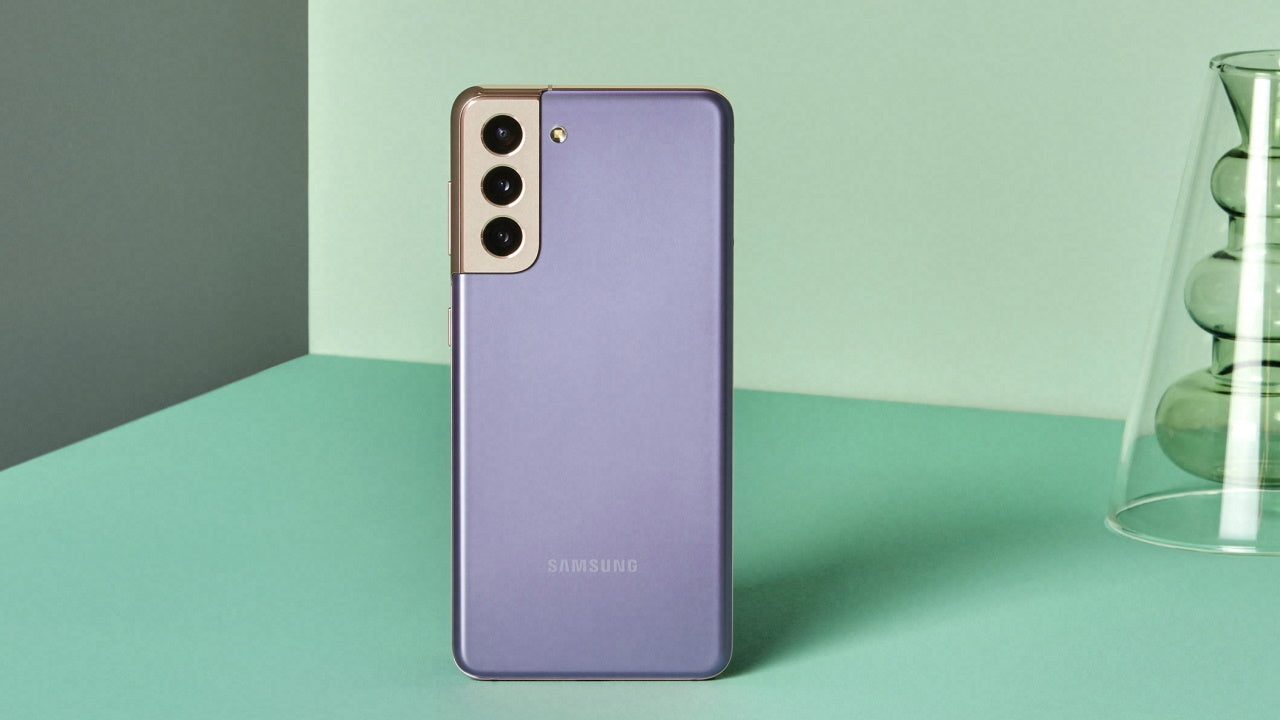
The aluminum frame feels plenty solid and that camera module wrapping around the corner looks genuinely unique. Nobody else does that design. When I pull this phone out, people notice.
Weighs 171 grams. Fits nicely in one hand. I can actually reach the whole screen with my thumb without doing weird grip adjustments. Small thing that matters more than specs would suggest.
Color options include Phantom Gray, Phantom White, Phantom Violet, and Phantom Pink. Got the violet one myself. It shifts color slightly depending on light angle. Sounds gimmicky but looks genuinely cool.
The Screen Though
Okay so here's where Samsung absolutely delivered. The Samsung Galaxy S21 5G comes with a 6.2-inch AMOLED display that's gorgeous. Not "good for the price" gorgeous. Just straight up gorgeous.
Colors look rich without being oversaturated. Blacks are actually black – no gray glow like cheaper phones. Watching movies on this thing became something I actually enjoy doing rather than tolerating.
Some people complained Samsung dropped to 1080p from higher resolution previous models. I genuinely cannot tell the difference during normal use. Maybe if you press your eyeball against the screen you'd notice? In regular viewing – scrolling feeds, watching videos, reading articles – it looks crisp and sharp. 421 pixels per inch is plenty dense.
The 120Hz refresh rate though. That changed everything. Scrolling feels buttery. Animations flow smooth. Gaming looks better. Once you adjust to 120Hz, going back to 60Hz phones feels like moving through molasses. Hard to explain until you experience it yourself.
HDR10+ support means streaming services look fantastic. Threw on some nature documentaries and honestly got distracted by how good the visuals looked. Samsung knows displays and this one proves it.
How Fast Is It Really?
Depends where you bought your Samsung Galaxy S21 5G. US models get the Snapdragon 888 chip. International versions have Samsung's own Exynos 2100. Both use tiny 5nm manufacturing. Both are fast.
Snapdragon edges ahead slightly in benchmarks and runs a bit cooler during gaming. But honestly unless you're obsessively comparing side by side, either processor handles everything you'd throw at it. Apps open instantly. Multitasking works flawlessly. Games run smooth on high settings.
8GB of RAM keeps things moving. I bounce between email, browser, Instagram, Spotify, maybe a game – never had to wait for anything to reload. Phone just handles it.
Storage is where Samsung annoyed me though. 128GB or 256GB. That's it. No SD card slot. Gone. Removed. If you shoot tons of video or download lots of stuff for offline, that storage fills up faster than you'd expect. Samsung basically forces the cloud on you. Not ideal but survivable.
Camera Situation
Three cameras on the back of the Samsung Galaxy S21 5G. 12MP main, 64MP telephoto, 12MP ultrawide. Plus a 10MP selfie cam. Numbers that look modest compared to competitors cramming in 108MP sensors and five different lenses.
Results matter more than specs though. And results impressed me.
The main 12MP shooter captures excellent photos in good light and holds up surprisingly well when things get darker. Colors look accurate. Details stay sharp. Dynamic range handles tricky lighting without blowing out skies or crushing shadows.
Zoom performance exceeded expectations. That 64MP telephoto with 3x hybrid zoom produces clean shots. Push past 10x and quality degrades noticeably – edges get mushy, details disappear. But within reasonable zoom ranges? Genuinely good stuff.
Night mode works well. Not quite Pixel-level magic but close. Dark scenes brighten up without looking fake or overly processed. I've gotten usable shots in conditions where my eyes could barely see.
Video recording goes up to 8K which sounds impressive but creates massive files and honestly who has an 8K TV anyway. 4K at 60fps hits the sweet spot. Looks fantastic, files stay reasonable size. Stabilization keeps footage smooth even walking around.
Battery Life Reality
The Samsung Galaxy S21 5G packs a 4000mAh battery which sounds average. Lives up to that expectation honestly.
Normal days – some social media, emails, music streaming, occasional photos – I end with 25-30% remaining. Heavy use drains faster obviously. Gaming especially eats through battery. But moderate users will get through a full day without stress.
Charging hits 25W wired which fills up in roughly an hour. 15W wireless charging works for overnight or desk charging. You can reverse wireless charge other devices too at 4.5W but it's so slow I've used it maybe twice ever.
No charger included in the box by the way. Samsung followed Apple's questionable lead there. Annoying but whatever.
Connectivity and All That Technical Stuff
5G works on both sub-6GHz and mmWave bands depending on carrier. In areas with actual 5G coverage speeds are ridiculous. Downloaded a full season of a show in minutes. Most places still run on LTE though so don't buy purely for 5G unless you've verified coverage in your area.
WiFi 6 support. Bluetooth 5.0. NFC for tap payments. GPS that actually locks on quickly and doesn't lose signal. Ultra-Wideband for precise location tracking and fancy features like digital car keys if you're into that.
Software Updates Situation
Samsung promised four major Android updates and five years of security patches for the Samsung Galaxy S21 5G. That's actually impressive for Android. Most manufacturers abandon phones after two years. Samsung stepped up here.
One UI – their custom Android skin – has gotten better over the years. Used to be bloated and ugly. Now it's actually pleasant to use. Tons of customization options if you want them, easy to ignore if you don't.
Who Should Actually Buy This
Someone wanting a high-end phone without extreme pricing. Current deals make the Samsung Galaxy S21 5G affordable for what you get.
Someone who values screen quality and wants something beautiful to look at daily. Samsung displays remain unmatched.
Someone okay with giving up expandable storage. If you need 512GB or more, look elsewhere.
Someone wanting long software support. Four years of updates means this phone stays current longer than most Android alternatives.
Skip it if you need the absolute best zoom capabilities. The S21 Ultra exists for that. Skip it if plastic backs genuinely offend you.
How Good is the Camera on the Samsung Galaxy S21 5G?
I've shot over 3,000 photos with the Samsung Galaxy S21 5G since picking one up. Weddings, hiking trips, random food pics, drunk selfies at bars, my cat doing absolutely nothing interesting. The full spectrum of smartphone photography.
So when someone asks me whether this camera holds up – especially now that newer phones exist – I've got opinions. Real ones based on actual use, not spec sheet regurgitation.
Here's the thing. Camera systems on phones have gotten so good that differences between flagships are often subtle. The Samsung Galaxy S21 5G doesn't have the biggest megapixel count or the most lenses. But megapixels stopped mattering years ago for most people. What matters is whether your photos look good when you pull them up later. Whether that sunset actually captured the way you remember it. Whether your kid's birthday photos turned out sharp instead of blurry messes.
Let me break down exactly what this camera can and can't do.
The Hardware You're Working With
Samsung kept things relatively simple here. Three rear cameras. One front camera. No crazy quad or penta setups trying to impress spec nerds.
The main shooter uses a 12MP sensor with an f/1.8 aperture. Dual Pixel autofocus locks on quick. Optical image stabilization keeps things steady when your hands aren't cooperating.
That 64MP telephoto lens handles zoom duties. It's not a true optical zoom like pricier phones use – Samsung went with a hybrid approach combining cropping and software magic. Works at f/2.0 aperture with its own OIS system.
The ultrawide camera matches the main at 12MP but opens up to f/2.2. Captures 120-degree field of view which fits way more scene into frame than you'd expect.
Around front, 10MP handles selfies and video calls at f/2.2.
Nothing revolutionary on paper. But execution matters more than specs.
Daylight Photography – Where This Phone Shines
Hand the Samsung Galaxy S21 5G to anyone during golden hour and they'll capture something beautiful. Almost guaranteed.
Daylight performance is genuinely excellent. Colors pop without looking cartoonish. Samsung dialed back the oversaturation their older phones were notorious for. Skin tones look natural now instead of weirdly orange or pink. Blues actually look like sky blues, not some hyperreal version.
Dynamic range impressed me repeatedly. Shooting into bright windows, backlit portraits, contrasty street scenes – the phone balances highlights and shadows better than I expected. Details stay visible in dark areas while bright spots don't blow out completely.
Sharpness is there too. That 12MP main sensor captures plenty of detail for social media, printing 8x10s, or cropping moderately. Edge-to-edge clarity holds up. Corners don't get mushy like cheaper phones.
The processing pipeline deserves credit. Samsung's algorithms make smart decisions about noise reduction, sharpening, and tone mapping. Photos look polished straight from camera without heavy editing. I've posted countless shots directly to Instagram without touching anything. They looked great.
Autofocus tracking works reliably. Point at a moving dog, running kid, whatever – the Samsung Galaxy S21 5G locks on and follows. Missed shots from focus hunting happen rarely. Not never, but rarely.
Low Light and Night Mode Reality
Here's where things get more complicated.
The main camera handles dim restaurants, evening streets, and indoor parties reasonably well. That f/1.8 aperture lets in decent light. OIS compensates for longer exposures. Results won't match what you'd get at noon outside, but they're usable.
Noise creeps in though. Push into darker scenes and you'll notice grain appearing, details softening, colors getting less accurate. The phone fights hard against physics but physics usually wins eventually.
Night mode helps significantly. Samsung's computational photography kicks in, capturing multiple exposures and combining them intelligently. Dark scenes brighten up dramatically. Details emerge from shadows. Noise gets suppressed.
Is it Pixel-level night photography? Honestly, no. Google still edges ahead in the darkest conditions. But the gap has narrowed considerably. The Samsung Galaxy S21 5G produces night shots I'm genuinely happy with most times.
Processing takes a few seconds in night mode. Hold still during capture or you'll get ghosting and blur. Tripod or propping against something solid helps for serious low-light work.
The ultrawide struggles more at night. Smaller sensor, dimmer aperture – physics again. Usable for social media but don't expect miracles.
Zoom Capabilities Tested
That 64MP telephoto confused me initially. Higher megapixels than the main camera? Weird choice.
Samsung's reasoning makes sense though. They crop into that high-resolution sensor to simulate zoom digitally while maintaining quality. Hybrid zoom they call it. Results vary depending on how far you push things.
At 3x zoom – the phone's sweet spot – photos look genuinely good. Sharp, detailed, minimal quality loss. Distant subjects come closer without obvious degradation. I've shot wildlife, architecture details, sports moments all at 3x and stayed satisfied.
Push to 10x and things hold together okay. Not great, but okay. Edges soften noticeably. Fine details disappear. But for Instagram or quick sharing, passable.
Beyond 10x? Gets rough fast. Samsung offers up to 30x "Space Zoom" which sounds impressive until you see the results. Mushy, processed-looking images with obvious artifacts. Party trick territory rather than actually useful photography.
Compare this to phones with true optical zoom – like Samsung's own Ultra models – and limitations become clear. The Samsung Galaxy S21 5G zoom works fine for casual use but won't satisfy anyone serious about telephoto shooting.
Ultrawide Perspective
The 12MP ultrawide became my surprise favorite lens.
That 120-degree field of view transforms how you capture spaces. Cramped rooms look spacious. Landscapes gain dramatic scope. Architecture shots include entire buildings instead of awkward partial views.
Quality holds up well in good light. Colors match the main camera closely – important for consistency when switching between lenses. Sharpness is solid across most of the frame though corners soften slightly.
Distortion correction works automatically. Straight lines stay relatively straight instead of curving wildly like fisheye lenses. Some warping happens at extreme edges but nothing distracting for normal shots.
I use ultrawide constantly now. Group photos where everyone actually fits. Interior real estate style shots. Creative low-angle perspectives. This lens expanded my mobile photography options more than expected.
Selfie Camera Assessment
Front-facing camera on the Samsung Galaxy S21 5G does its job competently.
10MP captures enough detail for social posts and video calls. Autofocus works – sounds basic but some phones still ship fixed-focus front cameras that can't handle arm-length variation.
Samsung's processing tends toward skin smoothing and face brightening. Some people love this. Others find it artificial. You can dial it back in settings if the default looks too filtered for your taste.
4K video recording from the front camera is nice for vlogger types. Quality exceeds what most laptop webcams offer significantly.
Portrait mode from the selfie cam works okay. Edge detection sometimes struggles with flyaway hair or complex backgrounds. But overall cutout quality is acceptable for casual portrait shots.
Video Recording Capabilities
Almost forgot to mention – the Samsung Galaxy S21 5G shoots video really well.
8K recording exists if you want it. Creates massive files, requires 8K display to appreciate fully, and crops the sensor significantly. More marketing checkbox than practical feature for most people.
4K at 60fps hits the practical sweet spot. Footage looks crisp, smooth, detailed. Stabilization keeps things watchable even walking around handheld. Colors match photo output nicely.
1080p works great for social media where platforms compress everything anyway. Smaller files, faster uploads, still looks good on phone screens.
Super Steady mode sacrifices some resolution for dramatically improved stabilization. Running, biking, action scenarios – footage comes out remarkably smooth. Impressive tech that actually proves useful.
Director's View lets you preview all cameras simultaneously while recording. Switch between perspectives mid-shot. Sounds gimmicky but I've found genuine creative uses for it at events.
Pro Mode for Manual Control
Photographers wanting more control will appreciate Pro mode on the Samsung Galaxy S21 5G.
Full manual exposure – ISO, shutter speed, white balance, focus. Adjust everything yourself instead of trusting automatic decisions. Helpful for tricky lighting situations where auto exposure guesses wrong.
RAW capture saves unprocessed files for editing flexibility. Push shadows, recover highlights, adjust colors without quality degradation from recompressing JPEGs. Serious mobile photographers will use this regularly.
Histogram overlay shows exposure distribution in real-time. Helpful for nailing exposure before shooting rather than fixing mistakes afterward.
Pro mode only works on the main and telephoto cameras though. Ultrawide stays auto-only which feels like an odd limitation.
Compared to Newer Phones
Obviously newer phones have arrived since the Samsung Galaxy S21 5G launched. How does this camera hold up now?
Honestly? Better than expected.
Flagship cameras improve incrementally these days. Each generation gets marginally better low-light performance, slightly improved processing, minor hardware upgrades. But revolutionary leaps stopped happening years ago.
The Samsung Galaxy S21 5G still captures beautiful photos. Still records excellent video. Still handles 90% of what normal people shoot with phones perfectly well.
Someone upgrading from a phone 3-4 years old would notice dramatic improvement. Someone coming from last year's flagship might struggle identifying differences in blind tests.
Current discounted prices make the value proposition strong for anyone prioritizing camera quality without spending flagship money on newest models.
Final Verdict on This Camera
The Samsung Galaxy S21 5G packs a camera system that genuinely delivers for most users.
Daylight photos look fantastic. Low light performs respectably with night mode helping significantly. Zoom works well within reasonable ranges. Ultrawide opens creative possibilities. Video quality impresses across resolutions.
It won't satisfy professional photographers demanding absolute maximum quality. The Ultra model exists for them. But for documenting life, capturing memories, posting to social media, even printing occasional photos – this camera handles everything competently and often excellently.
I still reach for my Samsung Galaxy S21 5G confidently knowing whatever moment I'm trying to capture will turn out well. That reliability matters more than any spec sheet comparison. When the camera disappears and you just capture what's in front of you without worrying about settings or limitations – that's success.
For anyone considering this phone specifically for camera quality, especially at current prices, I'd say go for it without hesitation.
Bottom Line
The Samsung Galaxy S21 5G isn't perfect. Missing SD card slot frustrates me. Plastic back won't wow anyone. Battery life is just okay.
But the display is stunning. Performance handles everything. Cameras produce great shots. Software support lasts for years. Current prices make the value proposition hard to beat.
I've recommended the Samsung Galaxy S21 5G to friends, family, random people who asked what Android to buy. Haven't heard complaints yet. That says something.
Not the newest Samsung anymore. Not the flashiest option. Just a solid phone that works well and doesn't cost insane money. Sometimes that's exactly what you need.
Share:
Samsung Galaxy S25 Ultra Hidden Features & Tips You Should Know
Samsung S21 FE 5G vs. S21 & S22 | Which Should You Buy?